
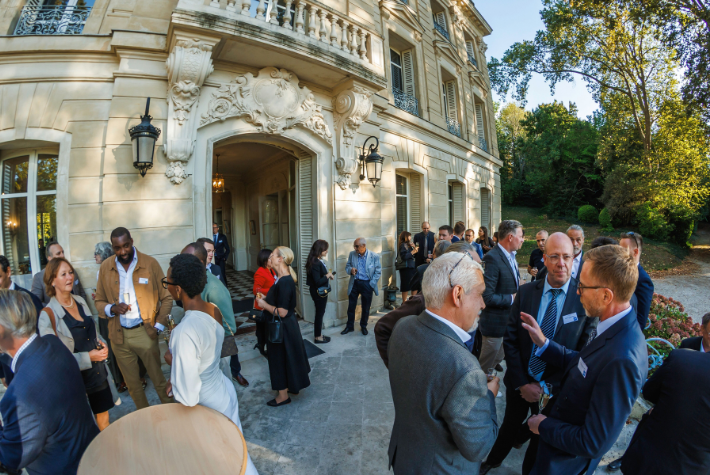
Since 2006, the Executive Master of Management in Energy has been helping professionals in the energy sector develop their managerial and strategic skills. To mark its 20th anniversary, IFP School and BI Norwegian Business School brought together students, alumni, faculty, and partners to celebrate two decades of international cooperation.
On September 16, IFP School and BI Norwegian Business School celebrated the 20th anniversary of the Executive Master of Management in Energy (EMME) program at the Domaine de Vert-Mont in Rueil-Malmaison.
More than sixty participants—current students and alumni of the program, faculty, and staff from the School, IFP Energies nouvelles, and BI—took part in this evening dedicated to two decades of partnership.
Launched in 2006, this program is designed for experienced professionals in the energy sector. Lasting 18 months, it combines distance learning with in-person sessions, comprising a total of five modules: three in Oslo and two in Rueil-Malmaison.
The program now has more than 450 graduates worldwide. They work in a sector undergoing constant transformation, marked by technological innovations, market volatility, and geopolitical uncertainties.
The EMME program is led by Prof. Arash Farnoosh, Prof. Maxime Schenckery and Meyling Siu on the IFP School side, and by Sissel Hammerstrøm, Prof. Lars Huemer, Marcia Caetano Langfelt and Idoia Olazar on the BI Norwegian Business School side.
The anniversary celebration began with remarks by Benjamin Herzhaft, Deputy Director General in charge of Research and Education at IFP Energies nouvelles; Pascal Longuemare, Director of IFP School; and Bendik Samuelsen, Vice Rector of BI Norwegian Business School.
“For BI Norwegian Business School, the Executive Master of Management in Energy is a great source of pride and fully deserves its status as a flagship program,” said Bendik Samuelsen.
Nadine Rouzaut, Affiliate Professor at IFP School and founder of the program, also reflected on the origins of EMME and the ambitions that guided its creation.
The event continued with a roundtable discussion titled “Energy, Governance, and Geopolitics,” featuring Laura Sima, Director of Research & Analysis at S&P Global, and Nick Sitter, Professor of Political Economy at BI Norwegian Business School. The discussion was moderated by Julien Dahan, Director & Global Energy Sector Coordinator at CFI Group and an EMME graduate (class of 2025).
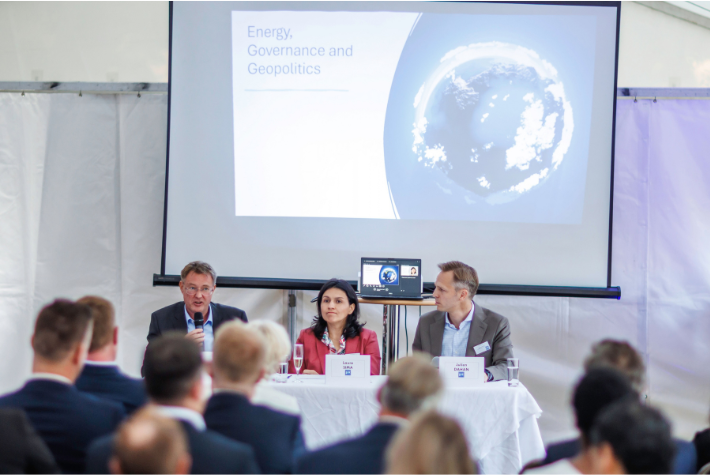
“Today’s geopolitics is geoeconomics, and energy has become a central strategic tool,” explained Nick Sitter. According to him, while sustainability and the green transition have long taken center stage, geopolitical tensions and rising costs are now bringing energy security and profitability back to the forefront of priorities. Players in the energy sector must now strike a balance between security, sustainability, and profitability: the energy trilemma.
Laura Sima, for her part, presented the strategies implemented by companies in the oil and gas sectors to adapt to the industry’s profound transformations.
The evening concluded with a cocktail reception, offering participants an opportunity for in-depth discussions about the program, its international network, and the challenges ahead for the energy sector.
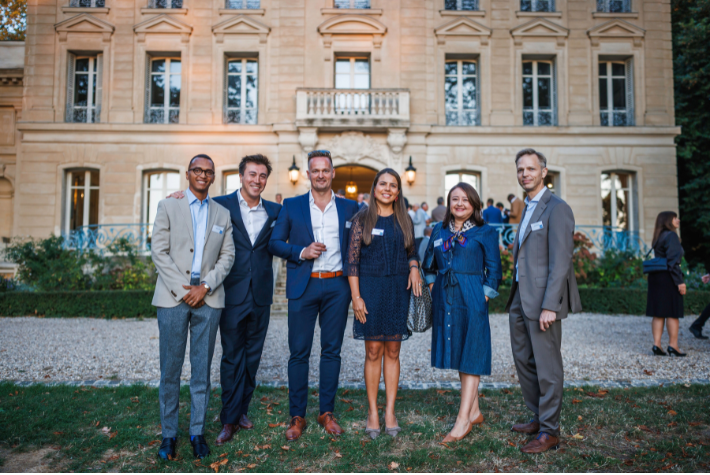
IFP School and BI Norwegian Business School would like to thank all participants as well as the teams involved in organizing this event, with a special mention to the Tuck Foundation for its invaluable support.